
.

Legal Developments in the World of Trademarks, Copyrights, Advertising, and Beyond

Copyrights

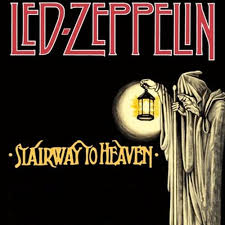
Led Zeppelin Reaches Heaven in Golden State Court: 9th Circuit Reverses Prior Decision in En Banc Ruling

March 23, 2020

by Brad Hattenbach

Download as a PDF
Share this page

We have previously written several posts about this copyright dispute over the signature opening guitar riff in the classic Led Zeppelin song “Stairway to Heaven.” You may recall, the estate of musician Randy Craig Wolfe, guitarist for the band Spirit, which reached some popularity in the 1960’s-70’s, filed suit against Led Zeppelin claiming that Jimmy Page copied the Stairway riff from a Spirit instrumental recorded several years prior called Taurus. (Therefore, we are unable to juxtapose lyrics from both songs in pithy verse for this post.) In a rare turnabout in view of recent music copyright infringement rulings, the piper apparently led the full 9th Circuit to reason, overruling the prior appellate panel decision, which had reversed the jury finding of no infringement. “Sometimes all of our [or perhaps the panel’s] thoughts are misgiving.”

Our first post covered the jury verdict in favor of the heavy metal balloon band. Our second post addressed the rationale for denial of attorney fees to the victorious defendants after trial. And, while I am an ardent music lover, I am not musically educated like my virtuoso colleague who deftly dissected the musical similarity issues in our most recent post. Thus, this final post (hopefully) in the series will comment on the issue of laches (or lack thereof) and address the en banc Court’s reversal of the “inverse ratio rule,” a long-standing legal doctrine in the “substantial similarity” analysis that is the basis for a determination of copyright infringement.

Why, and how, you might ask, was this action brought almost 50 years after both of the songs in question were written? Mr. Wolfe (nicknamed “Randy California” by none other than Jimmi Hendrix) apparently was unconcerned by any similarity between Stairway and Taurus. However, a number of writers commented on the similarity over the years and particularly in obituaries upon his untimely death in a tragic drowning accident in 1997. Normally, the legal doctrine of laches, which precludes redress after undue delay in taking action and resulting prejudice to the opposing party, would have preclude an infringement suit so long after the infringing act first occurred. However, a U.S. Supreme Court decision in 2014 held that laches is not a defense in copyright cases where the copyright infringement is ongoing. With the ubiquitous airplay of Stairway to Heaven on classic rock radio, much less continuing album sales of Led Zeppelin IV, it is hard to argue that any alleged infringement had stopped. Soon after the laches decision, a trustee of a trust set up by the estate of Mr. Wolfe opportunistically filed suit.

With the laches hurdle out of the way, the trust, as owner of a valid copyright, had to prove the defendants “copied protected aspects of the work” to achieve a judgment of copyright infringement. The 9th Circuit test for “copying” requires a determination of (a) “copying” [Hmm, you say, isn’t that redundant?]; and (b) “unlawful appropriation” [And where does this second part spring from?]. In the absence of explicit evidence of copying of a work, such can be proven by circumstantial evidence of access to the prior work and similarities in the works. Interestingly, Led Zeppelin opened for Spirit at a gig in Denver in 1968 and the bands appeared concurrently at several festival concerts the following year. More significantly, Jimmy Page admitted on the stand to owning the Spirit album on which Taurus was recorded (presumably before Stairway was written). Access proven; similarity for purposes of this part of the test was apparently not considered in question.

With regard to the second component of the paramount copying test, the 9th Circuit proceeds to explain “the hallmark of “unlawful appropriation” is that the works share substantial similarities,” i.e., something more than the similarity required for the subordinate copying test. In this case, the jury rendered a verdict on the facts presented at trial that the two songs were not “substantially similar.” It is extremely difficult for a court to overrule a factual determination by a jury. However, the plaintiff argued (among other things) that the trial judge committed error by not instructing the jury on the “inverse ratio” rule. To make things even more circular, the Court describes this rule as follows: “substantial similarity is inextricably linked to the issue of access” [Wait, didn’t they court say earlier that access was a component of a different, first part of the copying test?] and therefore “a lower standard of proof of substantial similarity [is required] when a high degree of access is shown,” i.e., an inverse ratio of proof [But what about it needing to be substantial?]. This logic seems cause for the forests to echo with laughter.

If your head is humming and this makes you wonder, it apparently made the present constitution of the 9th Circuit wonder as well. It noted in its discussion that all but one other circuit had already jettisoned the inverse ratio rule and many had never adopted it. The Court summarily had this to say on the way to its spring clean: “the inverse ratio rule, which is not part of the copyright statute, defies logic, and creates uncertainty for the courts and the parties. [W]e take this opportunity to abrogate the rule in the Ninth Circuit and overrule our prior cases to the contrary.” Substantial similarity between the original and accused works is now the primary factor in determining whether there is an appropriation which is unlawful. [We will leave what constitutes a “lawful” appropriation for another time.]

It is a big step for a court to overrule its own precedent, so this decision is significant in the realm of copyright law, particularly for the Court that has jurisdiction over the highly creative hub of southern California. As a result of this change, plaintiffs may find it harder to prove their case regarding the second prong of substantial similarity. Access to almost all recorded music is ubiquitous in this digitally interconnected age. This fact did not escape notice by the Court, and this may be a more significant influence in its turnabout than expressed in the decision. As Robert Plant wrote, “Yes, there are two paths you can go by, But in the long run, There's still time to change the road you're on.” It appears this advice was well received by the full Court.

Related Categories:

Copyrights

Firm Highlights

Insights

Minnesota Consumer-Fraud Enforcement: Disclaimers Won’t Cure Deception, and Penalties Can Add Up

Misleading advertising claims can lead to costly consequences. In State of Minnesota ex rel. Ellison v. Wall & Associates, Inc., No. A25-2064, 2026 WL 3118291 (Minn. App. Oct. 19, 2026), the Minnesota Court of Appeals recently affirmed a bench trial verdict against a tax-relief company and two executives for violations of the Minnesota Consumer Fraud Act (“MCFA”) and the Minnesota Deceptive Trade Practices Act (“MDTPA”). The decision, which affirmed a substantial restitution and civil penalty judgment, underscores the broad power of the Minnesota Attorney General to act against deceptive sales practices. The decision also offers practical lessons for businesses seeking to reduce liability risks in consumer-facing communications. Background Wall & Associates (“W&A”), a Virginia-based tax-relief company, marketed assistance to taxpayers seeking relief from outstanding federal and state tax liabilities, often with offers in compromise—agreements to settle tax liabilities for less than the amount owed. In its extensive advertising campaigns, W&A represented that its average client received a 90% reduction in their tax debt, that it was a local company with Minnesota offices, that it provided legal services, and that it would “Solve ALL Tax Problems.” In reality, W&A’s promises bore little resemblance to what many clients received. Most of W&A’s clients saw just a 9.5% reduction in federal tax debt and 1.2% in state tax debt. W&A had no permanent Minnesota offices. And W&A provided neither legal representation nor assistance with filing tax returns—those services required referrals to separate firms for an additional fee. All the while, W&A clients paid upfront and recurring fees, including during periods when W&A did no work on their cases. Minnesota Attorney General Keith Ellison sued W&A, its founder and owner Ernest Kenneth Wall, and its president and CEO Patrick Mark Yates, alleging violations of, among other laws, the MCFA and the MDTPA. Following a 12-day bench trial, the district court determined that W&A violated the MCFA and MDTPA through its false and embellished advertising. The district court also held Wall and Yates individually liable for those violations because they directed, participated in, and acquiesced in the violations. The district court ordered injunctive relief, $2.7 million in restitution (with Wall and Yates jointly and severally liable for $1.3 million), and civil penalties of $786,517 against W&A, $415,500 against Wall, and $207,750 against Yates. The district court also awarded over $2.5 million in attorneys’ fees and costs to the state. W&A, Wall, and Yates appealed to the Minnesota Court of Appeals, which affirmed the district court’s decision on October 19, 2026. Although W&A, Wall, and Yates challenged the judgment on numerous grounds, several highlights of the decision provide important takeaways for consumer-facing businesses. Individual Reliance Is Not Required for Statutory Liability W&A argued that Attorney General Ellison had to prove a causal nexus between each violation of the MCFA and MDTPA and the injury to a particular consumer to establish liability. In W&A’s view, this required proof that each injured consumer had personally relied on W&A’s false representation. The Court of Appeals rejected this argument based on the MCFA’s and MDTPA’s plain language, which requires no proof of actual deception or confusion by consumers. The Court of Appeals finally pointed to the Minnesota Supreme Court’s decision in State v. Minnesota School of Business, Inc., which held that when a defendant’s misrepresentations are directed at and affected “a broad group of consumers, proof of direct individual reliance is not required to establish a causal nexus between MCFA violations and the harm suffered by consumers.” 935 N.W.2d 124, 135 (Minn. 2019). The Court of Appeals affirmed, however, that a causal nexus is necessary to support an award of damages under the MCFA and MDTPA. In making that determination, district courts look to various factors, including whether the misrepresentations were “longstanding, pervasive, and widespread in communications directed to consumers,” whether the seller intended and understood that consumers would rely on the misrepresentations, and whether the information was of a kind on which consumers would typically rely. The Court of Appeals’ decision continues Minnesota School of Business’s broad interpretation of liability under the MCFA and the MDTPA. Coordinated marketing campaigns to a “broad group of consumers” may expose businesses to MCFA and MDTPA liability without customer-by-customer proof of injury. That said, a causal nexus remains an element of an MCFA and MDTPA claim, and businesses involved in litigation should build a clear record at trial and on appeal showing how each of the relevant factors bears on the causal-nexus inquiry. Contractual Disclaimers Are Not an Automatic Defense to a Misleading Pitch W&A next argued that disclaimers in its client contracts prevented consumers from claiming they had been misled by its advertising. Reiterating that individual reliance is not required under the MCFA and MDTPA, the Court of Appeals held that a contractual disclaimer does not necessarily defeat a claim based on a conflicting oral representation. And on the facts of this case, the Court of Appeals agreed with the district court that W&A’s contractual disclaimers were insufficient given the extensive misrepresentations by W&A and the unequal bargaining power between it and its customers. This holding confirms that contractual disclaimers are not a cure-all for misleading advertising or sales practices. Businesses should review the entire customer journey, including pre-contract representations, as those representations may survive a contractual disclaimer to the contrary. And if faced with litigation, businesses should build a strong record, both at trial and on appeal, showing why any disclaimer is effective in context. The State Has Broad Authority to Seek Restitution W&A also challenged Attorney General Ellison’s authority to seek restitution under the state’s parens patriae authority to protect residents’ collective interests, arguing that injury to only 228 Minnesotans did not affect a sufficiently substantial segment of the population. The Court of Appeals rejected a simple headcount approach, instead explaining that the state had a legitimate interest in protecting residents’ economic well-being as a whole. In any event, the Court of Appeals held that if restitution was not appropriate under the state’s parens patriae authority, then it would still be appropriate under the Attorney General’s enforcement powers under Minn. Stat. § 8.31. The decision reinforces that the broader and more sustained the deceptive advertising, the stronger the case for restitution to protect Minnesotans’ economic interests. Civil Penalties Accrue Per Violation, Not Per Defendant The Court of Appeals finally rejected W&A’s claim that the Attorney General’s enforcement powers under Minn. Stat. § 8.31 permit only civil penalties of up to $25,000 for each defendant. Rather, the Court of Appeals explained that penalties are limited to $25,000 per violation. Multiple violations can therefore produce substantially greater penalties. The Court of Appeals also rejected the argument that restitution made penalties unnecessary: repaying consumers does not eliminate the need to address gains from deceptive conduct and deter future violations. Final Takeaways Align every consumer-facing communication. Broad and extensive marketing campaigns can expose businesses to stronger enforcement standards under the MCFA and MDTPA, making it critical that consumer communications remain accurate and consistent from the first advertisement through the final sale. Plan for layered enforcement exposure. Penalties under the MCFA and MDTPA can add up quickly: W&A, Wall, and Yates ultimately faced more than $6 million in civil penalties, restitution, and attorneys’ fees. The decision continues a line of Minnesota cases recognizing the Attorney General’s broad consumer-protection authority. Details matter. Although the Attorney General’s enforcement power is broad, it is not boundless. As the Court of Appeals explained, issues of causation, the effectiveness of contractual disclaimers, and the availability of restitution and civil penalties all turn on the specific facts of the case. Effective advocacy at trial and on appeal is critical to developing the facts relevant to liability and damages.